Choosing a school for your child is not just an academic decision. It’s a long-term investment in their growth, confidence, and future. At The Pilot School, we turn your investment into a uniquely tailored education. We meet your child where they are and help them reach their full potential.
We can do this because our specialized model gives students the personalized attention, targeted instruction, and daily support of a team of experts so they can thrive. This differs from traditional school settings, which often focus on accommodations; Pilot focuses on transformation. What does that look like in practice? The table below outlines the key differences—and the true value—of a Pilot education.
Student : Faculty Ratio
At Pilot:
Pilot students enjoy a 5:1 student-to-faculty ratio with class sizes of 6 to 8 students.
Unspecialized Schooling:
On average, public schools have a 15:1 student-to-faculty ratio, and private schools have a ratio of 12:1. The avaerage public school class is 25 students, while private schools average closer to 19.
WHY IT MATTERS:
You’re investing in individual attention, customized instruction, and stronger teacher-student relationships.
Instructional Time
At Pilot:
In ELA, 135 minutes daily translates to nearly 20 minutes of 1:1 teacher time per student each day, plus 90 minutes of math, averaging nearly 13 minutes of 1:1 time.
Unspecialized Schooling:
Class sizes are larger and periods are shorter, often 45-55 minutes per subject. This means that even in English and math, individual teacher attention may just be 2-3 minutes per day.
WHY IT MATTERS:
More time, more focus. Pilot students benefit from triple to nearly ten times the amount of 1:1 teacher-to-student interaction compared to peers in other settings. This empowers deeper understanding, personalized feedback, and stronger skill mastery.
WILSON-CERTIFIED TEACHERS
At Pilot:
Every Wilson Reading class is taught by a Wilson-certified teacher. Many hold advanced (Level 2) certification. We have 8 certified Wilson Reading specialists on staff.
Unspecialized Schooling:
Wilson certification is costly and time-intensive. Most schools either don’t offer it or rely on teachers trained in the method but not fully certified. Expertise makes a difference.
WHY IT MATTERS:
You’re investing in proven, research-based reading instruction delivered by experts, not generalists. This is not “support on the side”; it is transformative intervention at the core of your child’s learning.
Integrated Therapies
At Pilot:
We integrate Speech, Occupational, and Physical Therapies into every student’s school day at no additional cost.
Unspecialized Schooling:
Access is limited and difficult to qualify for. Services, if available, are often delivered by itinerant staff. Most private schools do not offer them, so families must pay out of pocket and attend sessions after school.
WHY IT MATTERS:
You’re investing in comprehensive care at school, during the day, by people who know your child. No juggling appointments. No pulling out of school early. No added cost. No sacrifice of family time.
ONGOING ASSESSMENT & ADJUSTMENTS
At Pilot:
Faculty meet weekly to review each student’s progress and adjust programming in real time. A full team of teachers and therapists discusses each student weekly. Pilot makes changes right away when the team identifies a need during its weekly meeting.
Unspecialized Schooling:
Traditional schools review progress at regular intervals, such as in the fall and during IEP meetings. When teams identify needed changes, formal approval processes and bureaucracy can delay implementation.
WHY IT MATTERS:
You’re investing in agility. There is no languishing: when your child needs a change, it happens right away. This kind of responsiveness is rare, and it makes all the difference in student growth.
Highly trained faculty
At Pilot:
Teachers receive training in research-based intervention methods and neuroscience-informed instruction.
Unspecialized Schooling:
Teachers receive training to serve the general student population, with less emphasis on addressing learning differences.
WHY IT MATTERS:
You’re investing in a team that understands how your child learns, not just what to teach. Specialized expertise leads to breakthroughs, not just adaptations.
Intervention vs. accommodation
At Pilot:
Pilot uses an intervention model, targeted, student-centered, and designed to build new skills.
Unspecialized Schooling:
Access is limited and difficult to qualify for. Services, if available, are often delivered by itinerant staff. Most private schools do not offer them; families must often pay out-of-pocket and attend sessions after school.
WHY IT MATTERS:
You’re investing in real growth, not just coping strategies. Pilot doesn’t just meet your child where they are. Pilot helps them reach where they are meant to be. “Accommodations” and “learning support” cannot do this.
Integrated executive function support
At Pilot:
Pilot teachers integrate Executive Function support into every part of the school day. The support is across all classrooms, using a shared and consistent model.
Unspecialized Schooling:
Support is limited, inconsistent, and often isolated (e.g. homework check-in and locker clean-outs).
WHY IT MATTERS:
You’re investing in life-changing habits: planning, organizing, self-monitoring
Inclusive sports & clubs
At Pilot:
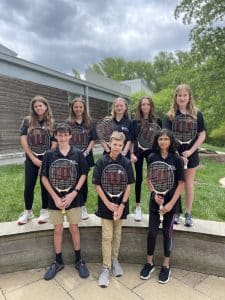
We encourage every student to participate in no-cut sports and inclusive clubs that welcome and support diverse learners.”
Unspecialized Schooling:
Participation often depends on try-outs or cuts. Students with learning or motor challenges are frequently left out or discouraged.
WHY IT MATTERS:
You’re investing in belonging. Your child belongs from day one. We create opportunities for every student to build confidence, form friendships, and develop a strong sense of self-worth.
wHAT tHAT INVESTMENT LOOKS LIKE
The Pilot School’s tuition for the 2026–2027 school year is $45,855. This is an all-inclusive tuition model—there are no additional programmatic, material, or therapeutic fees. Every student receives the services and supports they need, at the frequency and intensity that’s right for them. Your child’s needs may evolve throughout the year, and at Pilot, support evolves with them—without unexpected add-on costs.
More than 50% of Pilot families receive financial aid, and all families who qualify receive some level of assistance. Aid is awarded through the Clarity Financial Aid platform. For more guidance, please see our Pilot 2026-2027 Tuition Aid and Instructions.
In some instances, expenses incurred by attendance at The Pilot School may be treated as medical deductions by the IRS. We encourage families to consult with their tax advisor to explore this option.
All deposits and tuition payments are made through Blackbaud’s Tuition Management system, our tuition management partner.